We listen
Children’s cues, words and experiences are taken seriously and responded to with care.
Children’s safety and wellbeing
Our most important commitment
At Hawthorn Street Early Learning Centre, we are committed to creating a safe, nurturing and supportive environment for every child in our care. Your child’s safety is our top priority, and we take a proactive approach to protecting their wellbeing through comprehensive policies, staff training and clear procedures.
Every child has the right to feel safe and secure, both physically and emotionally. Our dedicated team is trained to recognise, respond to and report concerns about a child’s safety or wellbeing. We prioritise listening to children, supporting their voices and ensuring their experiences are valued and respected.
A child-safe culture
Child safety is not just a policy—it is a culture embedded in everything we do. Our team, volunteers and visitors each have a responsibility to protect children, respect their rights and speak up when something does not feel right.
Children’s cues, words and experiences are taken seriously and responded to with care.
Recruitment, training, supervision and risk assessment create dependable safeguards.
Concerns are documented, reported and followed through using clear procedures.
Feedback, evidence and review help strengthen practice over time.
National Child Safe Principles
We implement the National Principles for Child Safe Organisations, endorsed by the Australian Government in response to the recommendations of the Royal Commission into Institutional Responses to Child Sexual Abuse. They turn child safety from a policy into visible, accountable practice across the service.
Child safety is embedded at every level.
Children know their rights and are heard.
Families are informed, involved and supported.
Cultural safety and diverse needs are respected.
Recruitment, induction and supervision are rigorous.
Reporting processes are transparent and child-centred.
Educators are trained to identify, respond and protect.
Risks are actively identified and managed.
Practice and policies are regularly reviewed.
Clear procedures support accountability.
What families can expect
Educators and staff hold valid Working With Children Checks, complete National Police Checks where required, participate in reference-checked recruitment and undertake induction and ongoing child-protection training.
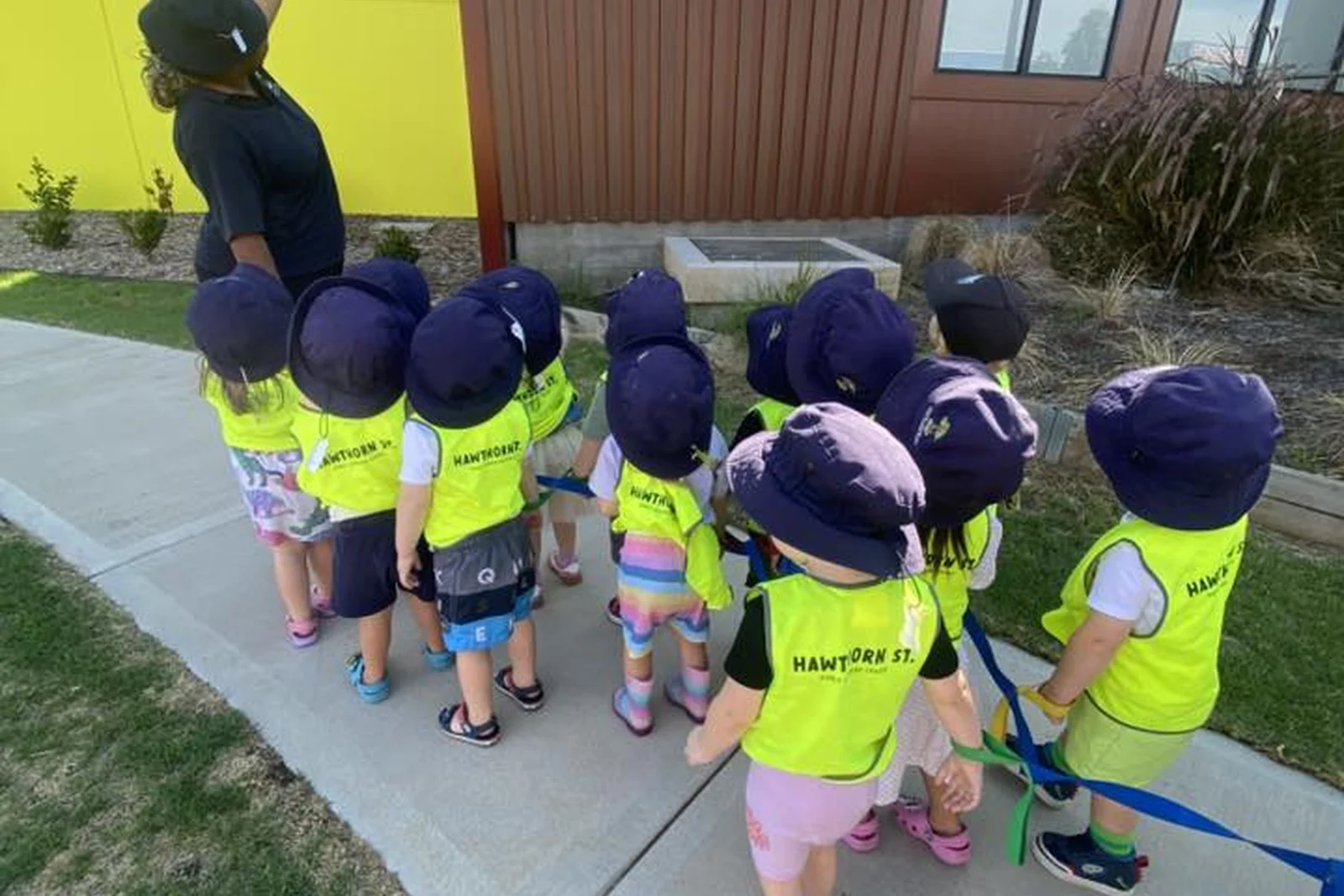
Educators maintain a constant, watchful presence so children remain visible and supported during play, routines, transitions and learning.
We conduct regular risk assessments across indoor, outdoor and community environments so potential hazards can be identified, reduced and addressed.
Our staff continue learning how to recognise signs of harm, understand their reporting responsibilities and actively promote a child-safe culture.
We work closely with families to create a safe, inclusive and supportive environment. Your involvement and input strengthen our approach to child safety.
CCTV monitors shared indoor and outdoor spaces to support safety, supervision and accountability. Cameras are never installed in bathrooms or nappy-change spaces. Footage is stored securely and is accessible only to authorised management for safety and compliance purposes.
When a concern arises
Every concern about a child’s safety is taken seriously and handled confidentially.
Creating a child-safe environment
Our centre is designed to be a safe and inclusive space for every child. We take a proactive approach to maintaining safety through the environment, relationships and communication.
We regularly inspect indoor and outdoor areas to identify and address potential risks before they affect children.
We monitor online activities and help children learn about safe, respectful and age-appropriate online behaviour.
Educators model positive, respectful interactions and teach children about personal safety and their right to feel safe.
Children are encouraged to express their feelings and concerns, and are actively taught how and where to seek help.
Code of Conduct for safety
All staff, volunteers and visitors must follow our Child Safe Code of Conduct. It sets the standards of behaviour and professionalism expected from every person who interacts with children.
Acceptable and unacceptable behaviours are clearly explained so adults understand their responsibilities and children’s rights remain central.
Any breach of the Code of Conduct is addressed promptly and through the appropriate reporting, management and child-protection processes.
Leadership, supervision and open communication help ensure expectations are understood and consistently demonstrated in practice.
How we work with families
We value families as essential partners in promoting a child-safe environment. Open communication between families and educators helps us understand each child, respond early to concerns and continually strengthen our practice.
Become familiar with our child-protection policies, procedures and the standards families should expect from a child-safe service.
Share any concern about your child’s safety or wellbeing with our educators or service Director. Questions and suggestions are always welcome.
Reinforce respectful behaviour, personal-safety messages and help-seeking skills at home in ways that suit your child.
Supporting children through challenges
Some children face challenges that require additional care, understanding and coordinated support. Our team responds compassionately and works with the people who know the child best.
Educators offer comfort, calm and understanding when children are experiencing difficulties or distress.
Children are supported to express themselves, develop coping skills and recognise trusted adults who can help.
We collaborate with families and relevant professionals to provide consistent, compassionate and practical support.
Feedback and continuous improvement
We are committed to improving our child-safety practices. Families can share feedback through conversations with educators, meetings with leadership or formal feedback channels. Every concern, question and suggestion helps us learn.
Trusted NSW guidance
These independent resources come from the NSW Office of the Children’s Guardian. They can help you recognise safe practice, talk with your child and know how to speak up.
Know what to look for, what to ask and what you should expect from any organisation caring for your child.
Read the family guide ↗02 · Downloadable checklistUse this one-page checklist to record what you see and the questions you want to ask about child safety.
Open the checklist ↗03 · For children under sixThe SAFE Series helps families talk about safe spaces, private body parts, feelings and trusted adults.
Explore the SAFE Series ↗04 · When something worries youClear guidance about speaking with a service and where families can go if a concern is not resolved.
See the reporting guidance ↗Need information in another language? View the Children’s Guardian’s translated Child Safe Standards brochures ↗
Acknowledgement of Country
We acknowledge the Tubbagah People of the Wiradjuri Nation as the Traditional Custodians of the land on which we meet and learn. We pay our respects to Elders past, present and emerging, and acknowledge their continuing spiritual connection to Country.
Talk with us
Families are encouraged to ask questions, share concerns and provide feedback directly with the service Director.
Call (02) 6884 3583info@hawthornstreetelc.com.au